



Key Highlights
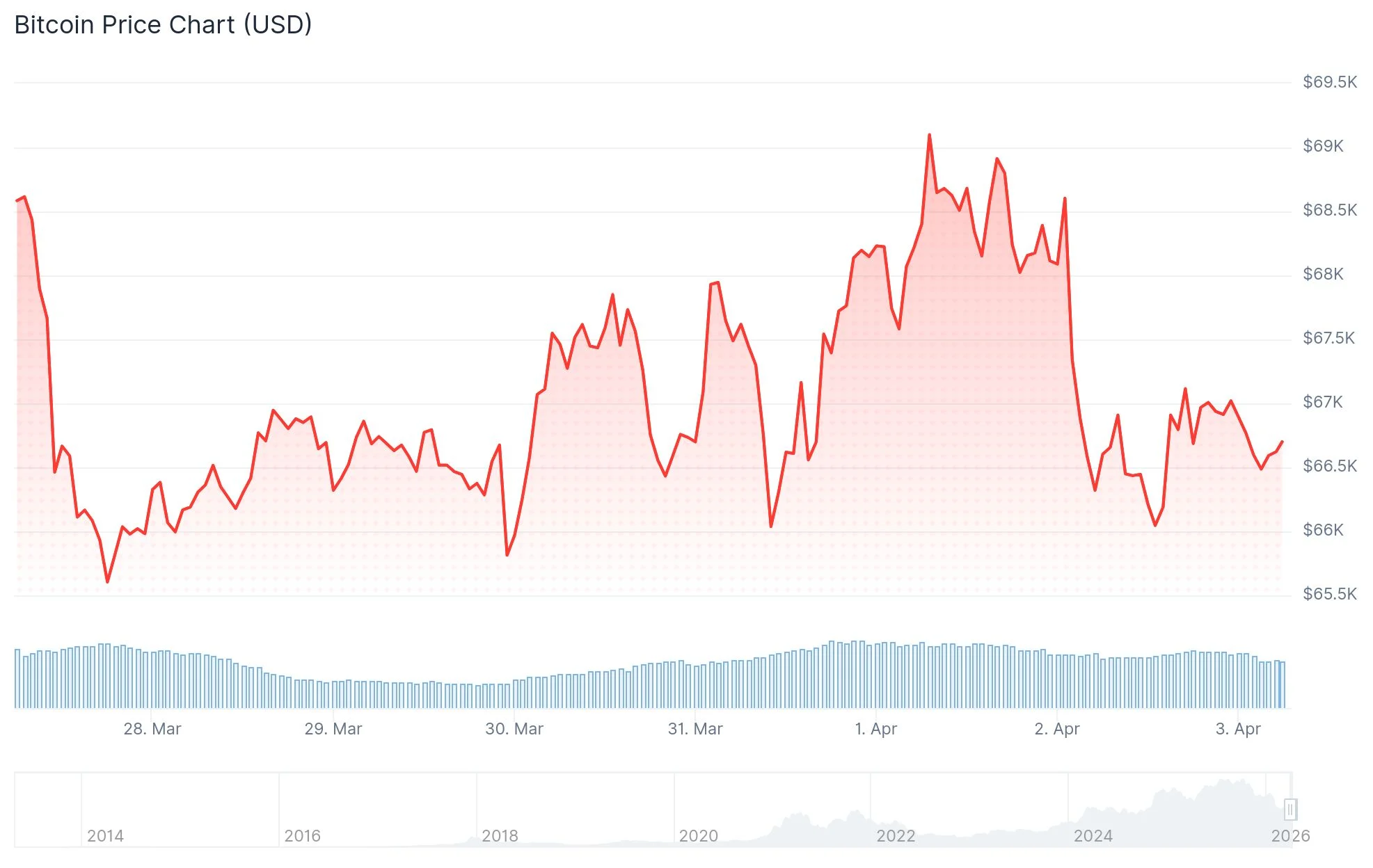
- BTC maintains position near $66,600 as Good Friday brings closures to CME futures and ETF trading venues
- Net Bitcoin demand registers -63,000 BTC while ETF and corporate acquisitions reach multi-month peaks
- Major wallet holders shift to distribution mode, with 1,000–10,000 BTC addresses declining approximately 188,000 BTC from their high point
- Major equity indices post weekly gains for the first time in five weeks, ending extended decline
- WTI crude oil jumps 11% to reach $111.54, marking the most significant single-session dollar increase since 1983
The Easter holiday weekend arrives with Bitcoin facing headwinds, while traditional equity markets finally broke their prolonged downward trajectory with modest gains.
Bitcoin maintained levels around $66,600 through Thursday as Good Friday brought trading halts to CME futures contracts and ETF platforms. This temporary shutdown eliminates two critical demand channels during a period when buying momentum has already weakened.
CryptoQuant metrics reveal 30-day apparent demand has reached approximately -63,000 BTC. This negative reading persists despite ETF acquisitions totaling roughly 50,000 BTC during the past month, representing the strongest performance since October 2025.
Strategy, known for its corporate Bitcoin accumulation strategy, contributed approximately 44,000 BTC during this same timeframe. Yet distribution from other market participants exceeded these combined purchases significantly.
Distribution Activity Among Major Wallets
The most pronounced pressure emerges from substantial wallet addresses. Holdings ranging from 1,000 to 10,000 BTC have transitioned into net distribution patterns. Their annual balance adjustment has fallen to roughly -188,000 BTC, contrasting sharply with the positive 200,000 BTC recorded at the 2024 cycle high.
Mid-tier holders have similarly reduced accumulation velocity. The Coinbase Premium indicator has persisted in negative territory, commonly interpreted as diminished appetite from U.S. spot market participants.
Singapore-based market maker Enflux shared insights with CoinDesk suggesting Bitcoin’s price support correlates with Federal Reserve rate adjustment expectations. This foundation now faces testing.
The ISM prices-paid index climbed to 78.3 in March, reaching its highest point since June 2022. Such elevated readings diminish the probability of imminent rate reductions, applying pressure to Bitcoin’s macroeconomic price support.
ETF activity patterns confirm this transformation. The week spanning March 24 recorded $296 million in net ETF withdrawals. April’s opening days have shown subdued inflow activity.
CryptoQuant analysts identified a resistance band spanning $71,500 to $81,200 for potential recovery movements. The upcoming critical economic release arrives April 9 with U.S. core PCE inflation figures.
Equity and Energy Markets
U.S. stock indices concluded the week with gains despite Thursday’s challenging session. The Dow Jones Industrial Average declined 61 points during that day’s trading, yet all three primary indexes achieved positive weekly performance, breaking their five-week decline pattern.

The session’s dominant narrative centered on extraordinary oil market movements. West Texas Intermediate crude concluded at $111.54, advancing 11% for the day. The $11.42 dollar increase represents the largest single-session gain in WTI records extending back to 1983.
The surge followed President Trump’s remarks addressing the Iranian conflict situation, which provided no concrete developments regarding the Strait of Hormuz closure resolution.
J.P. Morgan strategist Fabio Bassi projected oil prices will maintain elevation throughout the second quarter. His assessment places near-term exposure in the $120–$130 per barrel zone, with scenarios above $150 becoming viable if Strait disruptions extend into mid-May.
Market participants will also monitor the March nonfarm payrolls release, scheduled for Friday despite equity market closures. Economic forecasters anticipate employment growth will rebound following February’s weather- and labor-dispute-impacted figures.
