



TLDR
- Major US equity indices declined Tuesday, with the Dow and S&P 500 dropping approximately 0.5% amid uncertainty surrounding the Iran military situation.
- President Trump suggested hostilities might conclude shortly, while Defense Secretary Hegseth pledged continued operations until achieving strategic objectives.
- A tanker explosion occurred off Abu Dhabi’s coast, and a significant UAE refinery suspended activities following a drone attack.
- Brent crude settled around $91 per barrel after touching near $120 on Monday, maintaining levels exceeding 50% above year-start figures.
- CPI data arrives Wednesday and PCE figures Friday, though these reports will miss the latest oil price movements.
Wall Street experienced declines Tuesday morning as market participants struggled to interpret contradictory statements emerging from administration officials and military developments in Iran. The divergent messaging created challenges for assessing the conflict’s duration and its implications for energy markets and economic conditions.
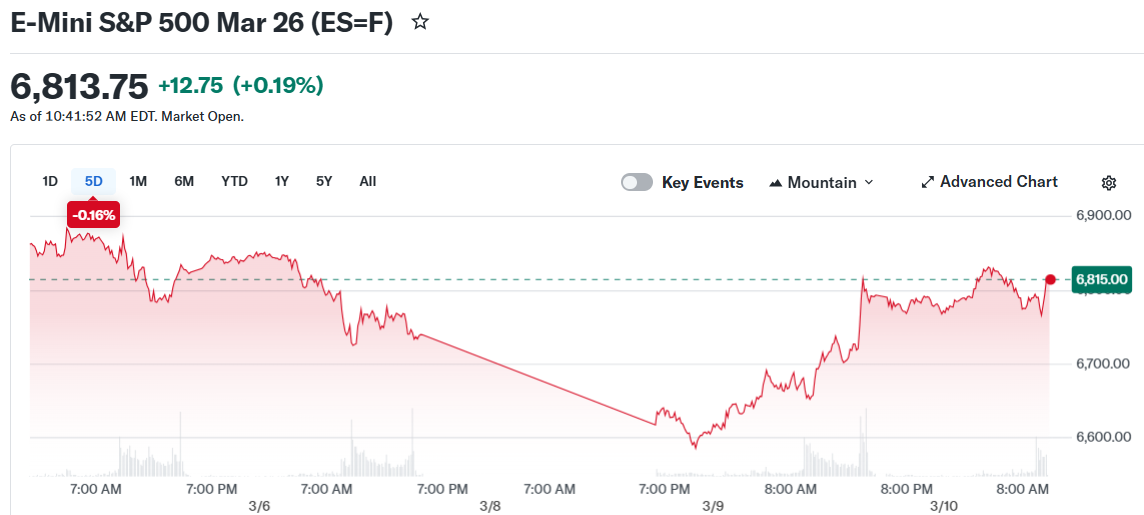
The Dow Jones Industrial Average and S&P 500 declined approximately 0.5% each. The Nasdaq Composite registered losses near 0.3%. These movements followed Monday’s volatile trading session that concluded with minor advances.
Investor sentiment deteriorated following Iranian state media reports of a tanker explosion occurring near Abu Dhabi. The development undermined earlier positive sentiment generated by President Trump’s remarks suggesting the conflict might conclude shortly.
Trump informed Republican lawmakers that American forces had struck 5,000 Iranian targets, reducing the nation’s missile capabilities to roughly one-tenth of previous levels. He characterized the military goals as nearing completion.
Defense Secretary Pete Hegseth delivered markedly different messaging during Tuesday’s press briefing. He described ongoing strikes as the campaign’s most intensive phase and committed to sustained operations until achieving total strategic victory over the Islamic Republic.
Oil Prices and Global Supply Under Pressure
Israeli Prime Minister Benjamin Netanyahu indicated operations would continue and authorized additional strikes targeting Tehran on Tuesday. Iran countered with drone and missile assaults throughout the Middle East region, affecting the UAE, Bahrain, and Kuwait.
The UAE’s largest refinery facility at Ruwais suspended operations following a drone strike that ignited fires in the vicinity. Abu Dhabi National Oil Co. began damage assessments at the location.
Brent crude had surged toward $120 per barrel during early Monday trading before retreating to approximately $91 following Trump’s public statements. West Texas Intermediate traded near $89. Both benchmarks remain elevated more than 50% compared to January levels.
Saudi Arabia, Iraq, the UAE, and Kuwait collectively reduced production by up to 6.7 million barrels daily—approximately 6% of worldwide supply. Saudi Aramco’s chief executive described the situation as the most severe crisis confronting regional energy infrastructure.
Trump announced US Navy vessels would provide tanker escorts through the Strait of Hormuz to maintain oil shipment continuity. He mentioned potential waivers for certain oil sanctions to moderate prices, without providing specifics.
Iran’s New Leadership and Path Forward
Iran selected Mojtaba Khamenei as its new supreme leader on Sunday. His father, Ali Khamenei, perished when US-Israeli strikes commenced on February 28. The younger Khamenei maintains close relationships with the Islamic Revolutionary Guard Corps.
Iranian President Pezeshkian expressed willingness to de-escalate hostilities, conditional upon neighboring nations refusing territorial access for attacks against Iran. Iran’s foreign minister stated discussions with Washington remain absent from current priorities.
The military operations have continued for 11 days. Casualty figures exceed 1,300 Iranians, along with seven American service members, two Israeli soldiers, and multiple individuals across Gulf nations.
CPI data releases Wednesday and PCE figures arrive Friday—both preceding the recent oil price surge and therefore missing these developments.
