


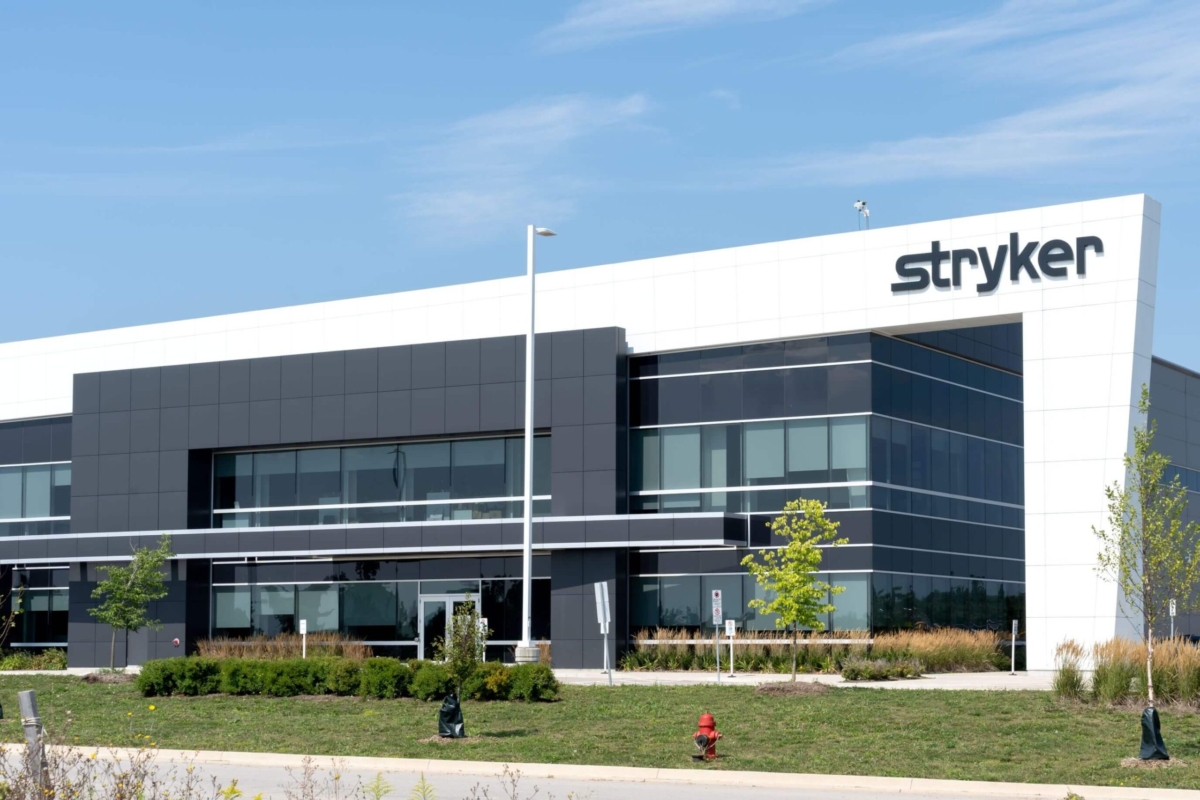
Key Highlights
- First quarter profit reached $745 million, representing an increase from $654 million in the prior-year period
- Quarterly revenue totaled $6.02 billion, falling below analyst projections of $6.35 billion
- Adjusted earnings per share of $2.60 underperformed against consensus expectations of $2.98
- March security breach linked to Iranian actors affected operational performance and financial outcomes
- Shares declined approximately 2% to $308.75 in extended trading; company reaffirmed annual projections
The medical device manufacturer delivered a first quarter characterized by year-over-year profit growth coupled with performance that fell below Wall Street expectations. A March security incident complicated the quarterly results.
Shares traded down roughly 2% to $308.75 in after-hours activity following the earnings announcement.
Net earnings for the quarter totaled $745 million, translating to $1.93 per share, compared with $654 million, or $1.69 per share, during the same quarter of 2025. Adjusted earnings reached $2.60 per share, trailing the analyst consensus of $2.98.
Quarterly revenue for the period ending March 31 stood at $6.02 billion. This figure represented a 2.6% year-over-year gain while coming in below the $6.35 billion Wall Street forecast.
Security Breach Affected Quarterly Performance
During March, a hacking collective called Handala with alleged Iranian connections took credit for a damaging security breach targeting Stryker. The incident resulted in extensive disruptions across the company’s Microsoft infrastructure and allegedly postponed certain surgical operations.
Several employees and contract workers shared on social platforms that the hacking group’s emblem showed up on their system login interfaces, although Reuters could not independently confirm these reports.
The company had previously indicated in April that the security incident would negatively affect first-quarter performance. Thursday’s announcement confirmed this impact.
According to Wall Street Journal reporting from that period, the attackers stated their actions were motivated by escalating tensions between the United States and Iran.
Divisional Performance Shows Variation
Stryker’s MedSurg and Neurotechnology division, representing the company’s largest business unit, generated sales of $3.21 billion, reflecting a 5% increase. This outcome fell short of analyst projections of $3.83 billion.
The Orthopaedics division delivered stronger results. Revenue climbed 6.3% to $2.81 billion, exceeding analyst expectations of $2.51 billion.
Weaker demand patterns for implants and devices utilized in sophisticated procedures — spanning spinal and orthopedic operations — contributed to the overall performance gaps.
The company faces direct competition from Zimmer Biomet (ZBH) and Johnson & Johnson (JNJ) throughout the orthopaedics marketplace, including hip and knee replacement systems, trauma products, and sports medicine applications.
Despite the quarterly challenges, Stryker maintained its full-year financial guidance. Management reaffirmed projections for adjusted annual earnings between $14.90 and $15.10 per share.
The unchanged forecast reflects management’s assessment that the security breach’s financial consequences remain limited to the first quarter and will have minimal bearing on full-year results.
With first quarter adjusted earnings of $2.60 per share against full-year guidance of $14.90–$15.10 per share, the company anticipates accelerated earnings momentum across the upcoming three quarters.
Management confirmed its full-year adjusted earnings per share target range of $14.90 to $15.10 per share.
