


Key Highlights
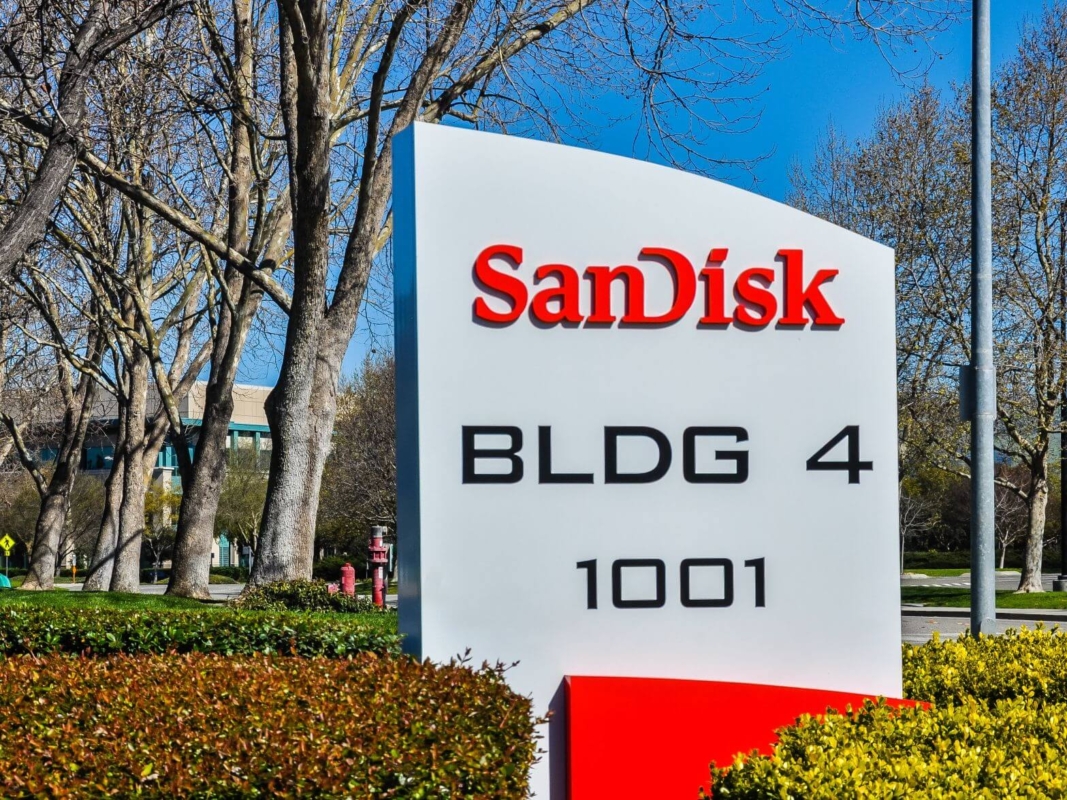
- Sandisk delivered a 168% gain during Q1 2025, marking its strongest quarterly performance in company history and extending its 12-month advance to 1,220%
- The Technology Select Sector SPDR ETF declined 7.90% during the first quarter, underperforming the S&P 500’s 4.81% loss
- AppLovin recorded the sector’s steepest decline at 44.78%, with Workday, Fair Isaac, Gartner, and Intuit also posting significant losses
- Approximately 75% of U.S. consumers now use AI for personal activities, while 72% incorporate it into workplace tasks
- Market analysts remain divided: some view the tech downturn as an entry point, while others caution about potential AI-related workforce disruption
Sandisk achieved an extraordinary first quarter, posting a 168% advance that positioned it as the leading performer among S&P 500 technology stocks. The flash memory manufacturer has accumulated a remarkable 1,220% gain over the trailing 12 months.
The wider technology sector experienced contrasting results. The Technology Select Sector SPDR ETF registered a 7.90% decline during Q1, underperforming the benchmark S&P 500 index, which slipped 4.81% throughout the quarter.
Several equities delivered robust returns despite challenging market conditions. Lumentum Holdings advanced 77.65%, Ciena rose 56.07%, Corning increased 46.81%, and Western Digital climbed 46.09% during the three-month period.
Among the quarter’s weakest performers, AppLovin topped the decline list with a 44.78% drop. Workday decreased 40.05%, Fair Isaac retreated 38.01%, Gartner slid 36.92%, and Intuit fell 35.23%.
Market concerns centered on whether artificial intelligence would diminish the relevance of established software providers. Ray Wang from Constellation Research challenged this perspective during a February CNBC appearance.
Wang characterized the market reaction as an excessive “SaaS apocalypse” narrative, suggesting that fundamentally sound software-as-a-service businesses were experiencing undeserved valuation pressure.
Morgan Stanley published research that same month demonstrating AI’s rapid integration into daily routines. Their survey of approximately 2,000 U.S. consumers revealed that 75% utilize AI for personal purposes and 72% apply it professionally, with nearly 20% engaging with the technology daily.
Artificial Intelligence Concerns Shape Market Sentiment
Apprehension about AI’s potential to reduce software consumption contributed significantly to the sector downturn. This perspective particularly affected companies like Workday and Intuit, which provide workforce management and financial software solutions.
Wedbush Securities analyst Dan Ives offered a contrarian viewpoint in March, characterizing the selloff as a strategic acquisition opportunity — particularly within cybersecurity and software segments supporting AI infrastructure expansion.
Seeking Alpha analyst David Templeton similarly suggested that artificial intelligence will more likely enhance employment opportunities rather than diminish them. He drew parallels to previous industrial and technological transformations, noting that innovations historically generated more positions than they eliminated.
Flash Memory Leader’s Exceptional Performance
Sandisk’s trajectory diverged sharply from sector peers. The flash memory provider capitalized on robust demand connected to AI infrastructure development and data storage requirements.
The company’s 168% first-quarter advance represented its finest quarterly showing ever recorded. This achievement materialized while broader markets navigated pressure from U.S.–Iran geopolitical tensions and worldwide economic uncertainty.
Lumentum and Ciena, both operating in optical networking markets, similarly posted impressive quarters as demand intensified for AI data center connectivity solutions.
Sandisk shares concluded Q1 with a 141.17% year-to-date gain according to certain market data, while alternative sources documented the quarterly advance at 168%, reflecting sustained investor accumulation through March.
