



Key Highlights
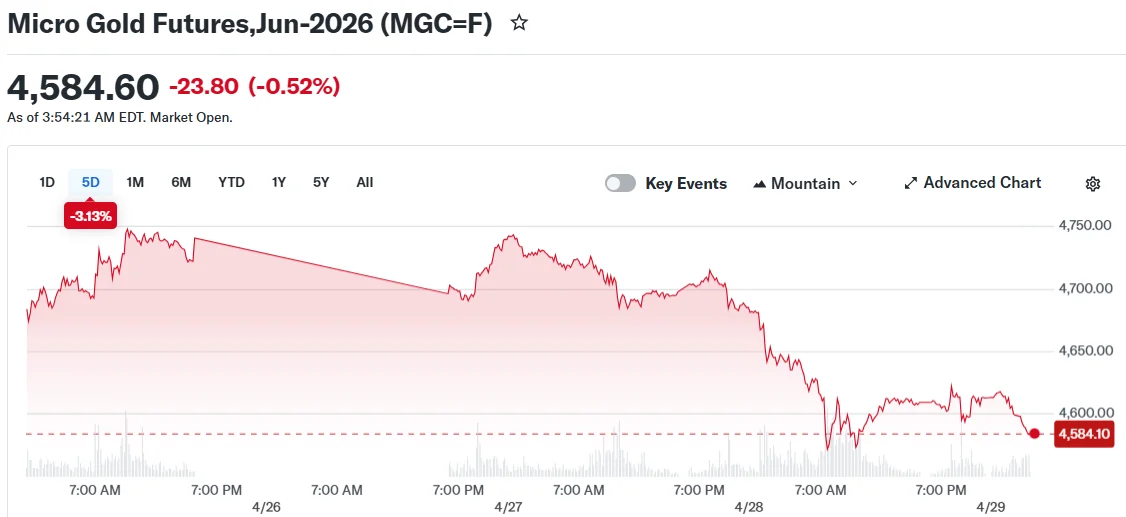
- Bullion remains near a four-week low, trading between $4,590 and $4,594 per ounce following a 2.4% decline across two sessions
- The escalating U.S.-Iran conflict and the blockade of the Strait of Hormuz are fueling concerns about rising inflation
- President Trump has directed officials to plan for an extended naval blockade targeting Iranian oil exports
- Market participants anticipate the Federal Reserve will maintain current interest rates at its policy meeting on Wednesday
- Precious metals have declined approximately 13% in value since hostilities erupted in late February
Precious metals markets stabilized on Wednesday following two consecutive sessions of significant declines, with prices remaining close to four-week lows as market participants monitored the U.S.-Iran situation and anticipated the Federal Reserve’s upcoming monetary policy announcement.
Spot bullion was changing hands near $4,593 per ounce during early market hours, while futures contracts were priced at $4,606.31 per ounce. The yellow metal has experienced approximately 13% erosion in value since hostilities between the U.S. and Iran commenced at February’s end.
The Strait of Hormuz remains closed for an indefinite period due to ongoing military operations, causing severe disruptions to petroleum shipments and driving crude oil valuations upward. These developments have intensified concerns about energy-driven price increases, potentially compelling monetary authorities to maintain elevated borrowing costs for an extended duration.
Elevated borrowing costs typically create headwinds for gold. Because the precious metal generates no income stream, rising rates increase the opportunity cost of holding bullion relative to bonds and other yield-producing instruments.
President Trump has instructed his team to develop plans for a sustained naval blockade targeting Iran, based on reporting from the Wall Street Journal published on Tuesday. The strategic blockade aims to eliminate Iran’s petroleum export capacity and compel Tehran toward diplomatic negotiations.
Iranian officials have requested the United States remove the naval blockade during ongoing negotiations. Diplomatic intermediaries in Pakistan indicate Tehran plans to present an updated proposal in the coming days, CNN reports.
Previous reporting indicated President Trump rejected an earlier Iranian offer that sought to postpone discussions regarding Iran’s atomic energy program. The U.S. administration deemed that proposal inadequate.
Rising Price Pressures Continue to Challenge Bullion
The ongoing blockade of the Strait of Hormuz represents the primary source of inflation anxiety in current markets. Oil supply interruptions elevate energy costs, which subsequently influence overall price levels throughout the economy.
OCBC analysts indicated that precious metals require either declining petroleum prices or reduced geopolitical friction before a meaningful recovery can materialize. Both circumstances appear unlikely in the near term.
Ole Hansen, who leads commodity strategy at Saxo Bank, noted that prices falling beneath the $4,650 support level activated technical selling pressure. He identified a reopening of the Strait of Hormuz as the most significant potential catalyst for a short-term price recovery.
Central Bank Decision and Interest Rate Trajectory
The Federal Reserve will likely maintain current interest rates when its two-day policy meeting concludes on Wednesday. Market observers are also tracking whether Jerome Powell will continue serving as Fed chair beyond his current term.
Increasing market expectations suggest the Fed will preserve current rate levels throughout the remainder of 2026, given persistent inflationary pressures stemming from the military conflict.
Policy decisions from the European Central Bank and the Bank of England are scheduled for release this week as well. The Bank of Japan maintained its benchmark rate at 0.75% during Tuesday’s meeting.
Silver advanced 0.8% to reach $73.66 per ounce. Platinum and palladium both recorded modest declines.
