


Key Highlights
- NCLH shares declined 6.3% in premarket hours following a significant downward revision to annual earnings projections
- First quarter adjusted EPS reached $0.23, surpassing analyst expectations of $0.15, while revenue of $2.3B fell short of the $2.36B projection
- 2026 adjusted EPS guidance revised to $1.45–$1.79 range, significantly below analyst projections of $2.12
- Geopolitical instability in the Middle East blamed for elevated fuel expenses and weakened travel appetite, particularly affecting European summer voyages
- The cruise operator began 2026 trailing booking targets, amplifying the impact of current challenges
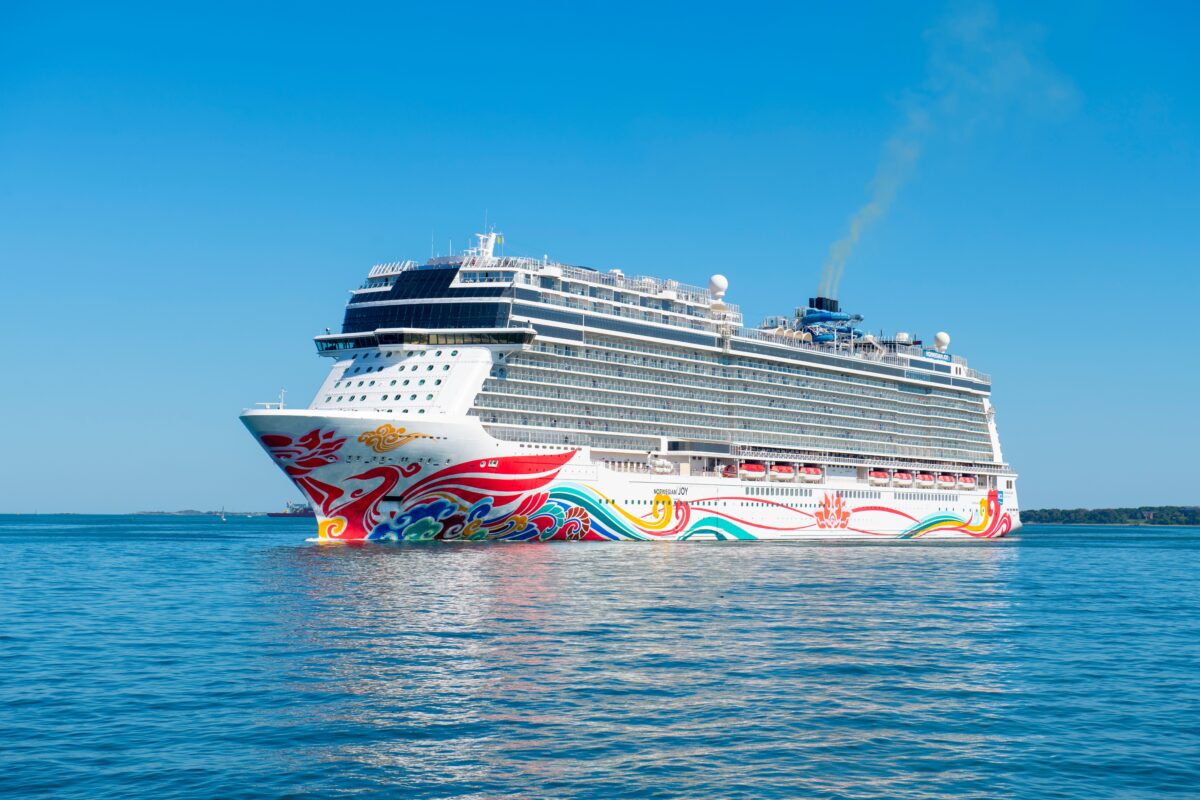
Norwegian Cruise Line (NCLH) experienced a substantial premarket decline on Monday following the company’s announcement of reduced annual earnings expectations, attributing the revision to Middle East geopolitical tensions that have dampened consumer demand and increased fuel expenses.
Norwegian Cruise Line Holdings Ltd., NCLH
Shares of NCLH tumbled 6.3% before the market opened, trading at $17.44, representing a $1.37 decrease.
The cruise operator reported first quarter adjusted earnings per share of $0.23, exceeding the Wall Street consensus estimate of $0.15. Quarterly revenue reached $2.3 billion, representing a 10% gain compared to the same period last year, though falling marginally short of analyst projections of $2.36 billion.
While the first quarter results topped expectations, market participants shifted their attention to forward guidance — where the picture appeared considerably bleaker.
Norwegian dramatically reduced its 2026 adjusted EPS forecast to a range spanning $1.45 to $1.79, establishing a midpoint of $1.62. This figure sits substantially below both the previous guidance midpoint of $2.38 and the analyst consensus target of $2.12.
For the second quarter, management anticipates adjusted EPS of approximately $0.38.
Geopolitical Turmoil Dampens Travel Demand
Norwegian explicitly identified “disruptions in the Middle East” as a primary headwind. The ongoing conflict has driven fuel prices upward while causing travelers to reconsider vacation plans, especially those involving European destinations during peak summer months.
The challenges have affected all three brands within Norwegian’s portfolio.
Management also revised its net yield forecast downward, now projecting a 3% to 5% decline on a constant currency basis for the full year versus 2025 performance. Previous guidance had called for a modest 0.4% increase.
Net yield serves as a critical metric measuring the company’s efficiency in converting available capacity into revenue, making this downward revision particularly significant.
Starting from a Position of Weakness
Norwegian acknowledged an additional challenge: the company began 2026 already falling short of internal booking benchmarks.
“These headwinds have hindered the company’s ability to accelerate bookings and close that gap,” management stated in the earnings release.
CEO John Chidsey emphasized the organization’s aggressive approach to cost reduction and operational improvement. Norwegian unveiled plans for $125 million in anticipated run-rate SG&A savings through a comprehensive operational streamlining initiative.
First-quarter adjusted EBITDA climbed 18% to $533 million, exceeding the company’s own guidance target of $515 million.
For the complete fiscal year, Norwegian currently projects adjusted EBITDA within a range of $2.48 billion to $2.64 billion.
The steep decline in NCLH shares created ripple effects throughout the cruise sector. Carnival (CCL) decreased 1.4% in premarket trading, while Royal Caribbean (RCL) slipped 1.7%.
Norwegian Cruise Line’s strategic direction in coming months will depend heavily on developments in Middle East tensions and whether European summer reservations show signs of improvement throughout the balance of the second quarter.
