


TLDR
- Equity futures declined Monday morning following weekend escalation in Middle East tensions that threaten diplomatic progress
- Dow futures surrendered 0.6% while S&P 500 and Nasdaq 100 futures declined 0.5% each
- Naval confrontation saw US forces engage Iranian vessel while Tehran blocked shipping through critical waterway
- Energy markets responded forcefully with WTI advancing 5.7% to approximately $87/barrel and Brent climbing 4.7% to roughly $95/barrel
- Gold retreated 1.3%, dollar index gained 0.1%, while Bitcoin declined 0.5% to $74,942
Equity futures opened Monday with losses as weekend hostilities between Washington and Tehran dampened peace expectations and triggered a sharp rally in crude oil markets.
The Dow Jones Industrial Average futures retreated 394 points, representing a 0.6% decline. Both S&P 500 and Nasdaq 100 futures contracts showed similar weakness, each falling approximately 0.5%.

The downturn arrives after Wall Street enjoyed substantial gains. Both the S&P 500 and Nasdaq reached fresh record peaks during the previous week. The Nasdaq had completed its 13th straight session of advances — representing its longest winning streak since 1992.
This positive momentum now confronts significant headwinds.
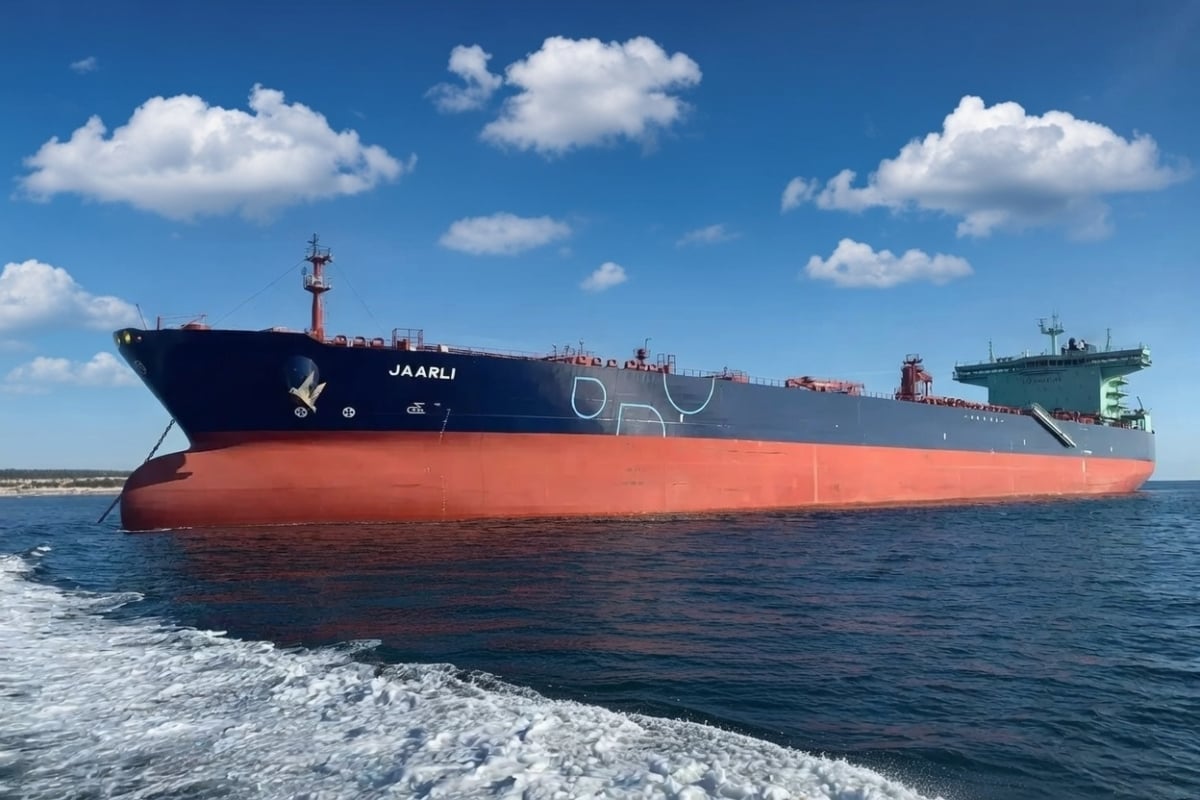
During the weekend, President Trump announced that US Navy forces intercepted an Iranian-flagged cargo vessel trying to circumvent the blockade of the Strait of Hormuz, disabling its engine room. Tehran responded by opening fire on vessels transiting the strait and halting passage through the critical waterway, reversing an earlier commitment to permit limited shipping activity.
Iranian state media outlets challenged reports regarding a second phase of peace negotiations, stating the “outlook for constructive talks remains bleak.” American officials reportedly continue planning to travel to Pakistan for additional diplomatic discussions.
Oil Spikes, Safe Havens Split
Oil markets responded immediately to the developments. Brent crude surged 4.8% to approximately $94.70 per barrel. WTI advanced 5.1% to $86.82. While both benchmarks remain beneath the psychologically significant $100 threshold that would amplify inflation concerns, the upward trajectory has investors on edge.
The escalating pressure surrounding the Strait of Hormuz — a vital passage for approximately 20% of worldwide oil supplies — reignites inflation concerns precisely when markets had begun pricing in greater stability.
Jim Reid, macro strategist at Deutsche Bank, highlighted a troubling parallel. He observed that the S&P 500 surged more than 10% during the initial weeks of the Ukraine conflict as investors anticipated a rapid peace settlement. “That episode is a clear warning sign,” he stated.
The dollar index advanced 0.1% versus a basket of major currencies. Gold, commonly viewed as a protective asset during turmoil, paradoxically declined 1.3% to $4,818 per ounce. Bitcoin shed 0.5% during the 24-hour period to $74,942. The benchmark 10-year Treasury note yield climbed 3 basis points to 4.27%.
What’s Ahead This Week
Corporate earnings releases maintain their rapid pace. Tesla (TSLA), INTC), and United Airlines ($UAL) will all deliver quarterly results during the coming days, providing markets an opportunity to shift attention back to corporate performance beyond geopolitical concerns.
During Monday’s pre-market session, Dow futures traded at 49,365, S&P 500 futures positioned at 7,129.50, and Nasdaq 100 futures stood at 26,718.75.
Iran’s Islamic Republic News Agency maintained skepticism regarding diplomatic breakthrough possibilities as of Sunday evening.
