



TLDR
- Brent crude declined 6.2% to $103.04 while WTI decreased 6.6% to $95.55 following diplomatic breakthrough reports
- Washington and Tehran are approaching agreement on a one-page memorandum to conclude hostilities
- The framework involves Tehran halting nuclear enrichment while Washington lifts sanctions and unfreezes assets
- President Trump halted “Project Freedom,” the convoy escort operation through the Strait of Hormuz
- American crude stockpiles declined 8.1 million barrels in the previous week, marking the largest decrease since mid-February
Crude markets experienced a significant decline on Wednesday following emerging reports that Washington and Tehran are approaching an agreement that would conclude the conflict and restore petroleum flows through the Strait of Hormuz.
Brent crude decreased 6.2% to reach $103.04 per barrel. West Texas Intermediate declined 6.6% to settle at $95.55. Both benchmark contracts had already experienced nearly 4% losses during the previous trading session.
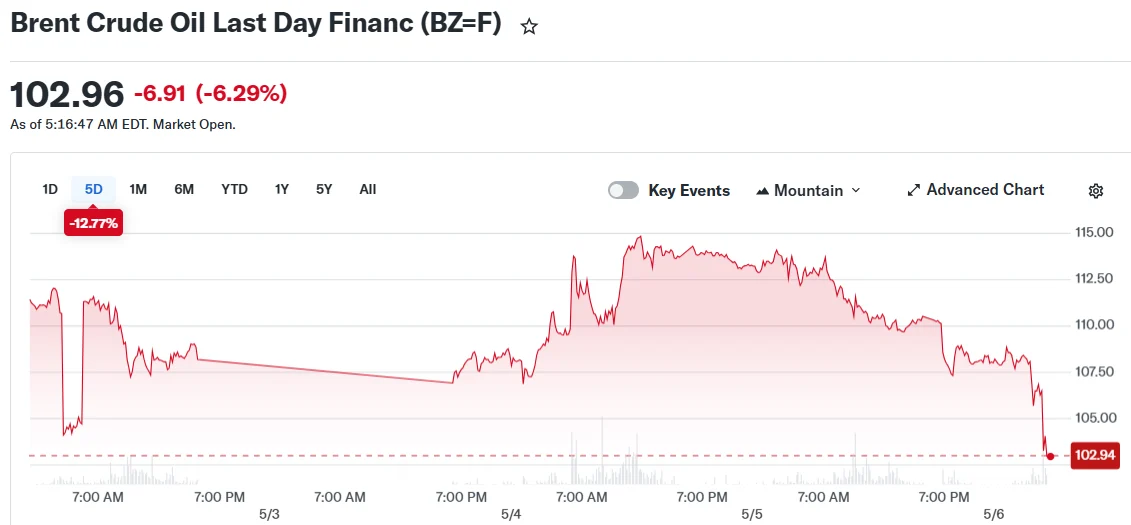
The market downturn followed an Axios report indicating the White House is approaching completion of a one-page memorandum of understanding with Iran. This agreement would establish groundwork for expanded nuclear discussions.
Administration officials indicated they anticipate Tehran’s responses on critical matters within 48 hours. While no final accord has been executed, officials characterized this moment as the closest both nations have come to resolution since hostilities commenced.
The proposed framework includes Tehran agreeing to halt nuclear enrichment activities. Washington would reciprocate by removing sanctions and releasing billions in frozen Iranian assets.
Both nations would also reduce restrictions on maritime commerce through the Strait of Hormuz. This waterway serves as a vital conduit for global petroleum exports.
Oil prices have surged approximately 50% since the conflict erupted in late February. The confrontation severed hundreds of millions of barrels of Persian Gulf petroleum from international markets.
More than 1,550 commercial vessels carrying approximately 22,000 sailors remain stranded in the Persian Gulf, according to General Dan Caine, chairman of the Joint Chiefs of Staff.
Hormuz Blockade Paused, But Supply Recovery Will Take Time
President Trump announced the U.S. would suspend “Project Freedom,” the military operation escorting commercial shipping through the strait, during ongoing negotiations.
“We have mutually agreed that, while the Blockade will remain in full force and effect, Project Freedom will be paused for a short period of time,” Trump posted on social media.
Secretary of State Marco Rubio informed reporters that “Operation Epic Fury is concluded,” 66 days after the U.S. and Israel commenced military operations against Iran.
Analysts caution that petroleum supply will require substantial time to recover, even with a potential agreement. “This is not a switch you can just flip,” stated Dilin Wu, research strategist at Pepperstone Group. Stranded tankers require rerouting, insurance markets need repricing, and production requires time to increase.
ING analysts cautioned that approximately 13 million barrels per day of interrupted supply is being compensated by declining inventories. “Tighter stocks will only leave the oil market trading in an ever more volatile manner,” they stated.
U.S. Crude Stocks See Large Drop
Despite the price decline, American supply data provided some market support. The American Petroleum Institute documented crude inventories decreased 8.1 million barrels during the previous week. Gasoline stocks dropped 6.1 million barrels while distillate stocks fell 4.6 million barrels.
Official inventory figures from the Energy Information Administration were scheduled for release later Wednesday.
Saudi Arabia reduced the price of its primary oil grade for Asian customers in June, though prices remain elevated due to continuing Middle East supply interruptions.
