



Quick Summary
- Bitcoin declined a modest 1.6% to $74,335 amid renewed U.S.-Iran tensions, demonstrating stronger stability compared to energy and equity markets
- Brent crude rallied 5.7% reaching $95.50 per barrel; WTI climbed 6.9% approaching $90
- Equity futures for S&P 500, Nasdaq, and Dow all retreated between 0.6% and 0.7% during Monday’s pre-market session
- Ether declined 2.6%, Solana slipped 1.5%, while BNB maintained price stability
- President Trump issued warnings regarding Iranian infrastructure via Truth Social following weekend seizure of Iranian vessel by U.S. Navy
Bitcoin demonstrated notable resilience compared to traditional markets this Monday as U.S.-Iran diplomatic tensions intensified following weekend developments.
U.S. Navy forces intercepted the Iranian vessel TOUSKA, prompting President Trump to announce via Truth Social that U.S. Marines had taken control of the ship. His statement included warnings about potential strikes on Iranian power facilities and transportation infrastructure should diplomatic efforts prove unsuccessful.
Iran’s government responded by reinstating restrictions on the Strait of Hormuz, a critical passage for global petroleum transport. The nation had announced complete access to the strait just days earlier on Friday, which contributed to the S&P 500 reaching an all-time high during that session.
Market sentiment shifted dramatically by Sunday evening.
Bitcoin was trading at $74,335 during Monday’s morning hours, representing a decline of merely 1.6% across the previous 24-hour period. The digital asset maintained a weekly gain of 4.8%. This marks the fourth significant Iran-related market event that cryptocurrency has weathered since hostilities began, with each successive episode producing diminishing price declines.

Ether retreated 2.6% to reach $2,272. Solana decreased 1.5% to $84. BNB held steady at $618. All top 10 cryptocurrencies by market capitalization remained within a 3% decline range.
Energy and Equity Markets Experience Sharper Losses
Oil markets responded dramatically to the geopolitical developments. Brent crude advanced 5.7% to $95.50 per barrel. WTI crude increased approximately 6.9% to reach just below $90 per barrel. European natural gas futures climbed as much as 11%.
Gold retreated 0.8% to $4,790. The U.S. dollar strengthened modestly as capital flowed toward conventional defensive assets.
Equity index futures declined across the board. Dow futures decreased approximately 0.7%. S&P 500 and Nasdaq 100 futures each fell roughly 0.6%. European equity futures indicated a 1.2% decline at Monday’s opening bell.
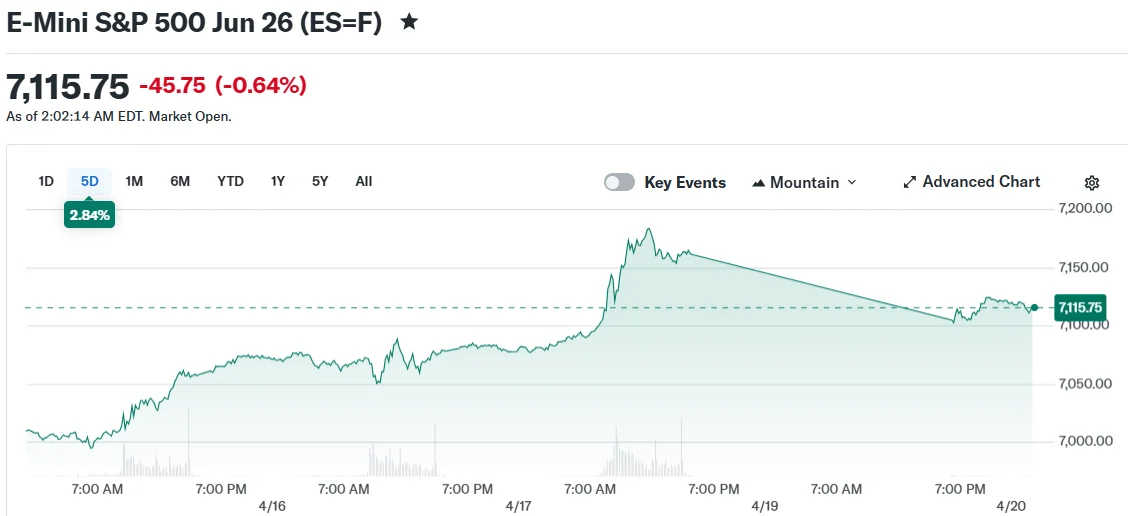
The weekend’s escalation reversed three weeks of declining geopolitical risk premiums across financial markets. Equities and emerging market assets had rallied broadly on Friday when Iran announced the strait would remain open.
Bitcoin Shows Decreasing Sensitivity to Iran-Related Events
Each time Iran-related developments have impacted markets since hostilities commenced, Bitcoin’s price reaction has become progressively muted. Market analysts suggest this pattern may indicate that investors intending to liquidate positions based on geopolitical headlines have already completed their selling.
The expanding footprint of spot Bitcoin ETFs may also be establishing stronger price support levels.
Market participants were monitoring whether the 10-year Treasury yield, hovering around 4.27%, combined with dollar strength would exert downward pressure on Bitcoin through broader risk-asset correlations.
Bitcoin maintained levels near $74,000 as European trading commenced Monday morning.
Investors also prepare for a busy corporate earnings calendar, with major reports scheduled from Tesla, Intel, and United Airlines this week.
