



Key Highlights
- Bernstein confirms Bitcoin’s $60,000 level represents the cycle low, with BTC now trading near $80,000
- More than 60% of BTC supply remains dormant for over a year, indicating strong conviction among holders
- Institutional ETF adoption and Strategy’s ongoing accumulation provide sustained demand
- Global stablecoin market capitalization surpassed $300 billion for the first time
- Real-world asset tokenization expanded 110% annually, reaching $345 billion
Bitcoin’s climb toward $80,000 gained validation from Bernstein analysts who identified the recent $60,000 level as the definitive cycle low. The research firm projects an extended bull phase that could surpass all previous market cycles in both duration and magnitude.
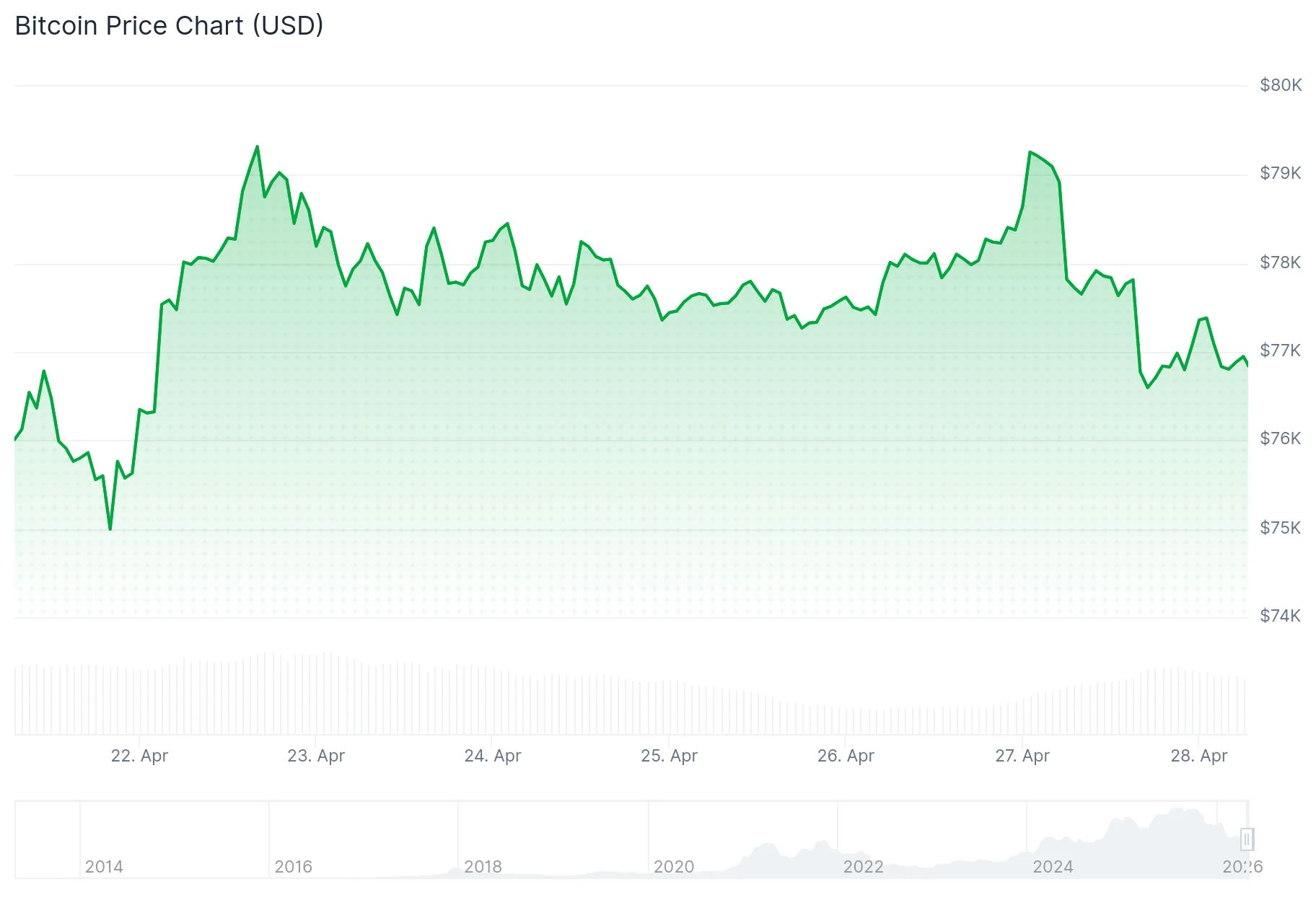
On April 27, Gautam Chhugani and his team at Bernstein released their analysis, emphasizing how current market structure differs fundamentally from earlier recovery periods.
“The best days of crypto are ahead which will reflect in a higher and structurally longer crypto bull cycle,” Chhugani wrote in a note to clients.
Bernstein’s framework highlights three primary catalysts shaping what the firm describes as “asymmetric upside” potential. These include institutional ETF capital flows, corporate treasury strategies centered on Bitcoin acquisition, and expanding connections between blockchain technology and conventional financial systems.
Data shows over 60% of Bitcoin’s circulating supply has remained stationary for more than twelve months. This concentration among long-term holders limits available selling pressure and typically correlates with upward price momentum.
Institutional Capital Creates Sustained Demand
Michael Saylor’s Strategy maintains a position of 818,334 BTC. The company’s STRC offering attracts yield-seeking investors through a structured approach to Bitcoin allocation.
Major financial institutions continue expanding crypto access. Morgan Stanley increased exposure through its Bitcoin ETF offerings, while Charles Schwab introduced spot trading capabilities, broadening participation among traditional investors.
Bernstein emphasizes these continuous capital inflows create a demand foundation absent from previous market cycles.
Stablecoin Supply and Tokenized Assets Reach Record Levels
Worldwide stablecoin circulation exceeded $300 billion, marking a historic milestone. Bernstein interprets this growth as evidence of genuine utility in digital dollar transactions and international settlements beyond pure trading activity.
Tokenization of conventional assets, including private credit instruments and US Treasury securities, jumped 110% year-over-year to reach $345 billion. This expansion demonstrates institutional acceptance of blockchain infrastructure across diverse asset categories.
Platforms such as Hyperliquid report growing engagement with tokenized equity and commodity products, including oil derivatives.
Regarding potential challenges, Bernstein acknowledged quantum computing as a future consideration for blockchain security protocols. The firm maintains the industry possesses adequate time to implement post-quantum cryptographic solutions before any meaningful risk emerges.
Bitcoin trades near $80,000 as these market forces continue developing.
